
Sanxingdui: A First-Time Visitor’s Guide
Discover monumental bronze masks, mysterious ritual objects and the remarkable ancient Shu civilization—along with the most practical ways to visit Sanxingdui Museum from Chengdu.
A Very Different Side of Ancient China
Sanxingdui is one of the most surprising archaeological discoveries in China. Its enormous bronze faces, protruding eyes, golden masks and sacred trees look unlike the objects many visitors expect to see in a traditional Chinese history museum.
The museum presents the material world of the ancient Shu civilization, which developed in the Sichuan Basin thousands of years ago. The objects suggest a highly organised society with sophisticated bronze casting, religious ceremonies and its own distinctive visual language.
For first-time visitors, Sanxingdui is not simply a collection of unusual masks. It is an opportunity to understand that early Chinese civilization developed through interactions among several regions and cultural traditions.
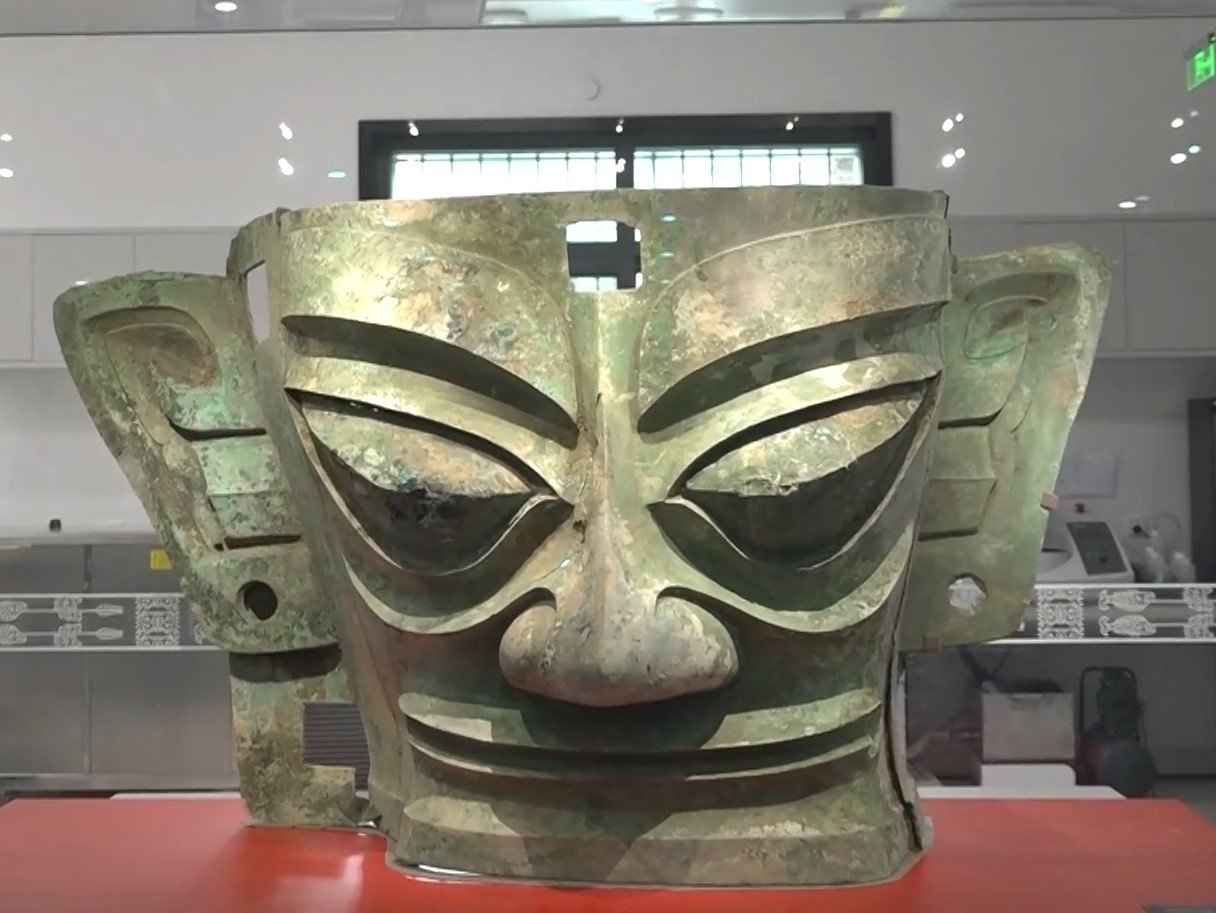
Understanding the Ancient Shu Civilization
Archaeology has answered many questions about Sanxingdui, but important parts of its political system, religious beliefs and written language remain uncertain.
A Regional Centre
The Sanxingdui ruins contain evidence of a substantial walled settlement, workshops, residential areas and ceremonial activity in the upper Yangtze region.
Remarkable Craftsmanship
Bronze, gold, jade, pottery and ivory objects reveal specialised production skills and the ability to organise large quantities of labour and material.
Connections and Originality
Some technologies and objects show links with other parts of ancient China, while Sanxingdui’s figures and ritual imagery remain highly distinctive.
What Should You See at Sanxingdui?
The museum is large and visually intense. These are the exhibits first-time visitors should avoid rushing past.
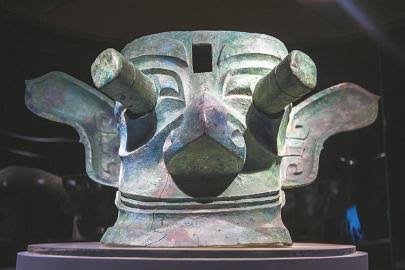
The Bronze Masks
Sanxingdui’s monumental bronze masks are immediately recognisable. Their sharply defined eyebrows, large ears and exaggerated eyes create faces that seem both human and supernatural.
Rather than asking only who each face represents, pay attention to how the masks may have functioned in ceremonies. Their scale, front-facing design and powerful expressions suggest they were intended to be seen from a distance and experienced collectively.
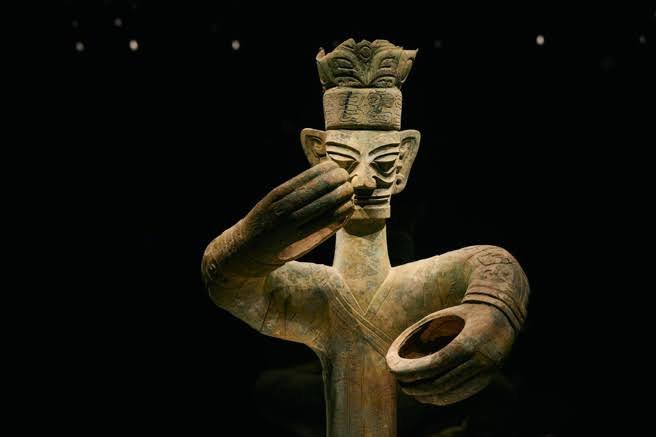
The Great Standing Figure
The tall bronze standing figure is one of Sanxingdui’s most commanding works. Its elaborate clothing, crown-like headpiece and oversized hands have generated decades of discussion.
The figure appears to have held an object, but the original object and precise identity of the figure remain debated. It may have represented a ruler, ritual specialist, deity or an idealised combination of political and religious authority.
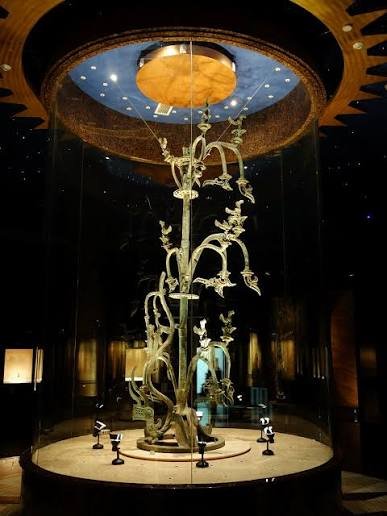
The Bronze Sacred Tree
Rising several metres inside the gallery, the bronze tree is one of the museum’s most technically and symbolically complex exhibits. Birds, branches, fruit-like forms and dragon imagery appear across its structure.
The tree is often interpreted through ancient ideas connecting heaven, earth and the human world. Although its full meaning cannot be reconstructed with certainty, it demonstrates extraordinary casting and assembly skills.
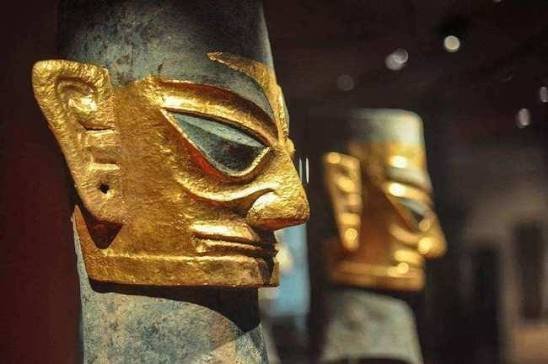
Golden Masks and Gold Objects
Gold masks and gold coverings add another layer to Sanxingdui’s visual world. Some bronze heads were originally decorated with gold foil, making them appear dramatically different from their present green-patinated surfaces.
Gold was probably not used simply because it was valuable. Its colour, reflection and resistance to corrosion may have carried ritual and symbolic meaning.
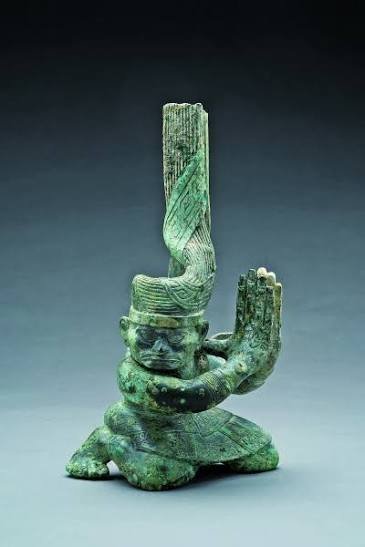
Recently Excavated Objects
The newer museum building gives significant space to objects excavated from additional ceremonial pits. These discoveries include complex bronze figures, animals, containers, gold pieces and objects that were found broken or deliberately deposited.
Pay attention to the excavation photographs and reconstructed contexts. They help explain that archaeological meaning comes not only from a beautiful object, but also from where and how it was discovered.
A Sensible Route for First-Time Visitors
Follow the exhibition sequence instead of walking directly to the largest masks. The earlier galleries provide the context needed to understand why the major objects matter.
Begin with the Discovery Story
Learn how the site was identified, how the major pits were excavated and how archaeological work has continued over several generations.
Understand the Ancient City
Review the settlement plan, environmental setting, craft production and evidence for social organisation before entering the most dramatic ritual galleries.
Continue to the Ritual Objects
Spend most of your time with the bronze masks, standing figure, sacred tree, gold objects and recently excavated composite sculptures.
Finish with Conservation
Where visitor access is available, look at the museum’s conservation and restoration displays to understand how damaged objects are cleaned, studied and reconstructed.
How to Visit Sanxingdui from Chengdu
Sanxingdui Museum is outside Chengdu in Guanghan. The best transport choice depends on whether you value independence, convenience or the lowest possible cost.
Private Car or Guided Transfer
A private transfer is the simplest choice for first-time international visitors, families and travellers who do not want to manage several booking platforms.
- Advantages: Hotel pickup and flexible timing
- Best for: Families and small groups
- Consider: Higher cost than public transport
High-Speed Train and Taxi
Take a suitable train from Chengdu to Guanghan North Railway Station, followed by a taxi or ride-hailing car to the museum.
- Advantages: Usually fast and efficient
- Best for: Independent travellers
- Consider: Train times and station transfer
Tourist Shuttle Bus
Direct tourist buses may operate between central Chengdu and Sanxingdui. Departure points and frequencies can change seasonally.
- Advantages: Direct and economical
- Best for: Budget-conscious visitors
- Consider: Fixed departure and return times
A Comfortable Sanxingdui Day Trip
The following schedule is designed to avoid rushing through the galleries. Actual times depend on traffic, ticket availability and your departure point in Chengdu.
Tickets, Passports and Practical Information
Sanxingdui is extremely popular. The biggest mistake is arranging transport before confirming that suitable museum tickets are available.
① Reserve in Advance
Museum entry normally uses a real-name reservation system. Popular dates can sell out, especially during weekends, school holidays and Chinese public holidays.
② Check Passport Support
Foreign visitors should confirm which identification types are supported by the current booking platform. Enter passport information carefully and carry the original passport used for the reservation.
③ Confirm Opening Hours
Opening times, last-entry times and extended evening sessions can change. Check the museum’s official notice immediately before your visit.
④ Allow Time for Entry
Security screening and identity checks may take time. Arrive before your reserved period rather than planning a very tight connection from the railway station.
⑤ Consider an Audio Guide
Without historical context, the galleries can become a sequence of dramatic objects. An English-speaking guide or suitable audio resource can make the visit much more meaningful.
⑥ Wear Comfortable Shoes
The exhibition building is large and visitors spend considerable time standing. Comfortable shoes matter more than formal clothing.
How to Get More from Your Visit
Read the Context First
Do not skip the opening galleries. Understanding the site and excavation history will make the later objects easier to interpret.
Avoid Only Photographing
The most popular objects attract crowds. Take a photograph, then move slightly to one side and spend time looking at the details.
Visit on a Weekday
A normal weekday outside major holidays generally offers a calmer experience, although advance booking may still be necessary.
Do Not Overload the Day
Combining Sanxingdui with several distant attractions may save a calendar day but often produces a rushed museum visit.
Bring Water but Check Rules
Carry water for the journey, but follow the museum’s current rules about drinks and food inside exhibition areas.
Check Photography Restrictions
Photography rules can vary by gallery or temporary exhibition. Avoid flash and follow the signs beside individual exhibits.
Who Will Enjoy Sanxingdui Most?
| Visitor Type | Is Sanxingdui Recommended? | What to Consider |
|---|---|---|
| History and archaeology lovers | Highly recommended | Allow at least three to four hours. |
| First-time visitors to Sichuan | Recommended with enough time | Best added after experiencing central Chengdu. |
| Families with older children | Usually a good choice | Use stories and visual details to keep children engaged. |
| Travellers with only one day in Chengdu | Usually not the first priority | Central Chengdu and the pandas may offer a broader introduction. |
| Visitors uninterested in museums | Consider carefully | The trip requires significant transport and indoor viewing time. |
Sanxingdui Travel FAQ
Is Sanxingdui worth visiting from Chengdu?
How much time do I need at Sanxingdui Museum?
Can foreign visitors buy Sanxingdui tickets?
What is the easiest way to reach Sanxingdui?
Can I combine Sanxingdui with the Chengdu Panda Base?
Is Sanxingdui connected to the Three Kingdoms?
Need Help Planning Your Sanxingdui Day Trip?
We can help you compare transport options, organise a realistic museum schedule and connect Sanxingdui with the right parts of your Chengdu and Sichuan itinerary.
Wander Sichuan provides destination information and itinerary inspiration. Formal quotations, transport, guiding services, contracts, payments and confirmed travel arrangements are handled by our licensed travel agency partner.