
How to Photograph Jiuzhaigou
Practical advice for capturing turquoise lakes, mountain reflections, colorful forests and flowing waterfalls without rushing through one of Sichuan's most extraordinary landscapes.
Jiuzhaigou looks almost unreal in photographs, but capturing it well requires more than pointing a camera at bright blue water. Light, reflections, crowds, weather and the pace of your visit can all change the final image.
Jiuzhaigou is filled with obvious photographic subjects: intensely colored lakes, layered waterfalls, snow-dusted peaks, traditional villages and forests that change dramatically with the seasons. The challenge is not finding something beautiful. The challenge is turning that beauty into a photograph with structure, atmosphere and a clear visual focus.
Many visitors try to photograph everything they see. They arrive at a viewpoint, take several quick pictures and immediately move to the next shuttle bus. That approach produces a large number of images, but often misses the quieter moments when reflections become clearer, clouds move across a mountain or light reaches the forest floor.
The most important photography tip for Jiuzhaigou: choose fewer scenes and spend longer at each one. A carefully observed composition is usually more memorable than dozens of nearly identical wide-angle photographs.
Jiuzhaigou Photography at a Glance
Lakes, reflections, waterfalls, autumn forests, mountain layers and environmental details.
A standard zoom is the most flexible choice for viewpoints, paths and changing compositions.
A circular polarizing filter can reduce glare and reveal more color beneath the water.
Bright water, dark forests, changing weather and limited time at popular viewpoints.
Useful Starting Settings
There is no single correct camera setting for Jiuzhaigou. Conditions change constantly as you move between open lakes, shaded forests and waterfalls. The following settings are starting points rather than strict rules.
Quick Camera Reference
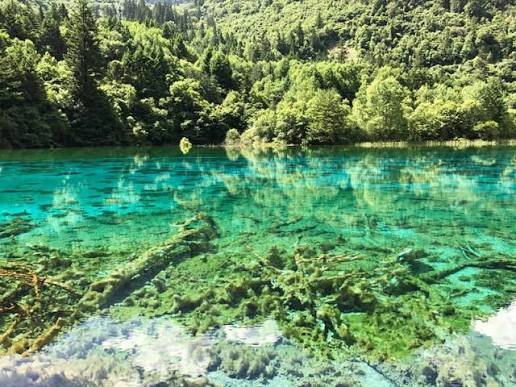
Use Color Without Letting It Overwhelm the Composition
Five Flower Lake is one of Jiuzhaigou's most photographed locations. Its water can reveal combinations of turquoise, green, blue and yellow, while fallen tree trunks remain visible beneath the surface.
The color is so striking that it is easy to rely on saturation alone. Look for visual structure instead. Use the shoreline, underwater trunks, reflections and changing bands of color to guide the viewer through the frame.
A polarizing filter may help reduce surface glare, but turning it too far can remove reflections completely and make the scene feel flat. Rotate it slowly while watching how the water and reflected forest change.
Photograph both a wide landscape and tighter details of underwater branches, color transitions and reflected trees.
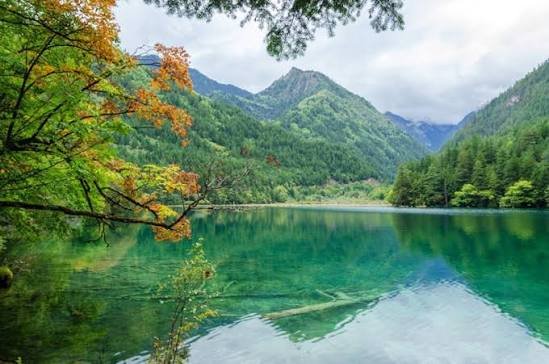
Arrive When the Water Is Calm
Mirror Lake is best known for reflections of mountains, forests and clouds. The strongest photographs usually depend less on equipment than on water conditions.
Calm water creates clear symmetry, while wind breaks the reflection into abstract patterns. Both can produce useful images, but they communicate different moods.
For a classic reflection, keep the horizon level and decide whether the real landscape or its reflection should dominate. Placing the shoreline exactly in the center creates formal symmetry. Moving it above or below the center produces a more dynamic composition.
Check the brightest cloud reflections carefully. They can lose detail even when the surrounding forest appears dark.
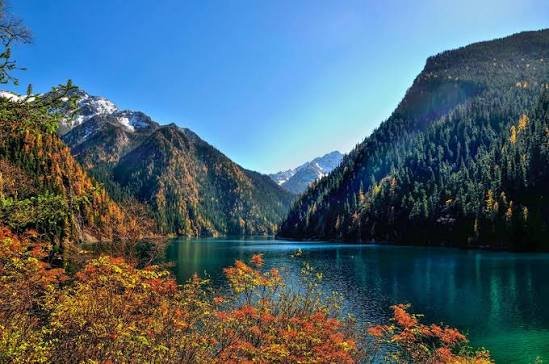
Create Depth With Mountain Layers
Long Lake provides a broader mountain landscape than many of Jiuzhaigou's smaller lakes. The scale is impressive, but wide scenes can become visually empty when everything is placed at the same distance.
Look for foreground elements such as branches, shoreline vegetation, rocks or snow. These elements create layers and make the distant mountains feel larger.
A longer focal length can also be useful. Instead of including the entire lake, isolate repeating mountain ridges, changing weather or patches of light moving across the landscape.
Clouds and mist are not necessarily bad conditions. They can separate the mountain layers and create a stronger sense of depth.
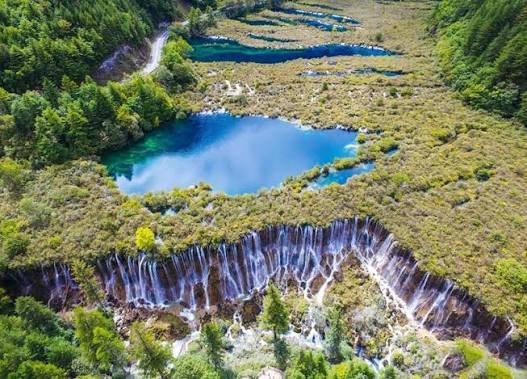
Choose Between Texture and Motion
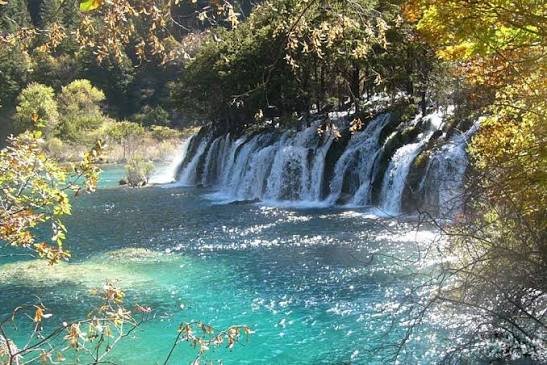
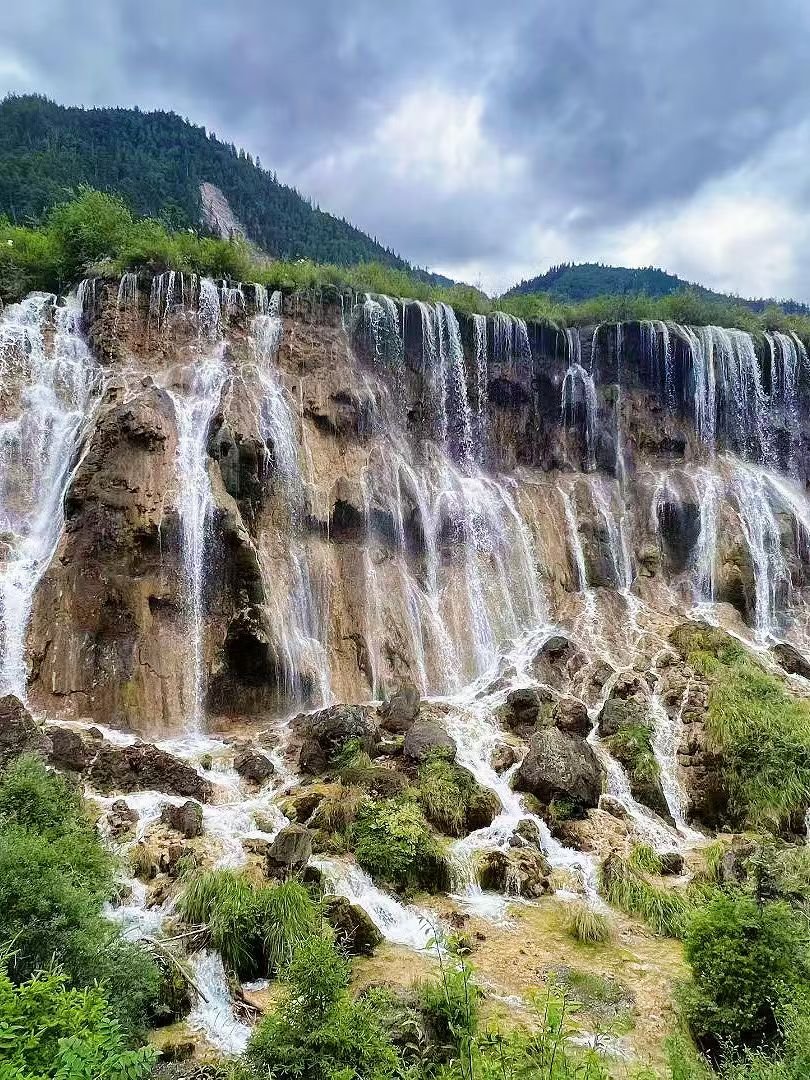
Waterfalls are often photographed with long exposures, but smooth water is not automatically better. Jiuzhaigou's waterfalls contain branches, rock ledges and multiple channels that can lose definition if the exposure becomes too long.
Use a faster shutter speed when you want to preserve the texture and energy of the falling water. Use a moderately slower speed when you want the individual streams to connect into smoother shapes.
Strong contrast can be a problem when bright water is surrounded by dark forest. Watch the highlights and avoid exposing only for the shadowed vegetation.
Use a railing, stable surface or careful handholding when tripods are inconvenient or restricted. Always follow current park rules and keep pathways clear.
Photograph the Relationship Between Water and Village Life
The Shuzheng area offers more than a single lake view. Connected pools, trees, wooden structures and Tibetan-style architecture create opportunities for layered compositions.
Instead of treating the buildings only as background decoration, consider how they relate to the surrounding landscape. Rooflines can echo mountain shapes, while paths and water channels can guide the viewer toward a village.
A standard or short telephoto focal length is useful for simplifying the scene and removing distracting areas from the edge of the frame.
Ask before taking close portraits of local residents, and avoid photographing private or religious activity in an intrusive way.
How the Light Changes During the Day
Jiuzhaigou is surrounded by mountains and forests, so direct sunlight reaches different locations at different times. A lake may remain in shadow while a nearby mountain is already brightly lit. Flexibility is more useful than expecting perfect golden-hour light everywhere.
Calmer Reflections
Early conditions may offer quieter water and softer reflections. Shaded areas can still be cool and dark, so watch your shutter speed.
Strong Water Color
Higher light can reveal the color and underwater detail of clear lakes, although glare and contrast may become more difficult to control.
Warmer Forest Detail
Angled light can add depth to forests and mountain ridges. Some valleys enter shadow earlier than expected.
Six Techniques That Work Well in Jiuzhaigou
Use Reflections as Part of the Subject
Do not photograph only the object above the water. Look at how trees, clouds and mountains are transformed by the reflected surface.
Include a Strong Foreground
Rocks, branches, leaves and shoreline plants can give scale to broad landscapes and guide the eye into the frame.
Look for Smaller Details
Fallen leaves beneath clear water, ice patterns, tree bark and moving streams often produce more personal images than another wide viewpoint.
Control Bright Highlights
Waterfalls, clouds and reflective water can become overexposed quickly. Use the histogram or highlight warning rather than relying only on screen brightness.
Use People to Show Scale
A small person on a distant boardwalk can communicate the size of a waterfall or mountain without becoming the main subject.
Wait for Separation
At busy viewpoints, pause for a few minutes. Small gaps in the crowd can dramatically simplify a composition.
Photographing Jiuzhaigou With a Phone
A modern smartphone is capable of producing excellent Jiuzhaigou images, particularly in good daylight. The main advantage is speed: you can react quickly as the shuttle route, weather and viewpoints change.
- Clean the camera lens frequently. Mist, fingerprints and rain can reduce contrast.
- Tap the brightest part of the water or sky and reduce exposure slightly if highlights look too white.
- Avoid excessive digital zoom. Move closer where paths allow or use the phone's optical lens options.
- Use the grid to keep lake horizons and architectural lines level.
- Take both horizontal and vertical versions for websites, stories and social media.
- Avoid pushing saturation too far. Jiuzhaigou's water is already colorful without extreme editing.
A Simple One-Day Photography Plan
Exact access and shuttle arrangements can change, so this should be treated as a photography strategy rather than a fixed transport schedule. Check the current park map and follow on-site guidance.
From Reflections to Evening Forests
Prioritize a few different types of scenery instead of trying to photograph every named lake.
Begin with a calm lake scene when wind and visitor movement may be lower.
Use stronger daylight to photograph water color and underwater detail.
Experiment with shutter speed and tighter compositions around moving water.
Finish with mountain layers, village elements or quieter forest details.
What Photography Equipment Should You Bring?
Standard Zoom Lens
The most practical option for changing quickly between wide lakes, waterfalls and medium-distance details.
Telephoto Lens
Useful for isolating mountain layers, distant trees, architectural details and sections of waterfalls.
Polarizing Filter
Helps manage glare and reveal underwater detail, but should be adjusted carefully rather than used at maximum strength for every photograph.
Spare Battery
Cold temperatures, frequent screen use and constant shooting can reduce battery life more quickly than expected.
Lens Cloth
Waterfall spray, rain and condensation can leave marks on lenses and phone cameras.
Light Rain Protection
A simple camera cover or waterproof bag helps protect equipment during changing mountain weather.
Photograph the Landscape Responsibly
Jiuzhaigou is a protected natural environment rather than a photography studio. Stay on designated paths and boardwalks, do not enter the water and do not move branches, rocks or vegetation to improve a composition.
Keep equipment out of busy walking routes. Large tripods, drones and other equipment may be restricted or unsuitable in certain areas, so check current official park regulations before your visit.
Avoid blocking a viewpoint for an extended period, especially when other visitors are waiting. Take the photograph, move aside and return when the area becomes quieter.
Good Photography Begins With Slowing Down
Jiuzhaigou does not require expensive equipment to look impressive. Its landscapes provide extraordinary color, reflections and natural structure. What matters most is learning to notice how those elements change.
Watch the wind move across a lake. Wait for sunlight to reach a mountain ridge. Turn away from the main viewpoint and look at leaves beneath the water. Take one wide photograph, then search for the smaller story inside it.
The best images will not simply prove that you visited Jiuzhaigou. They will show how the landscape felt when you stopped long enough to observe it.
Plan a Better Jiuzhaigou Journey
Build your visit around the landscapes, walking pace and photography opportunities that matter most to you.
Plan My Sichuan Trip